An early morning walk

There was a mist over the wetlands as I walked out on the trail at the Roosevelt Wetlands. It was mid-November and a cold morning although it warmed up fast. The mist and dew made it easy to see the spiderwebs.

The muhly grass had lost their pink blooms and now just looked like white feathers in the mist. The sun was coming up as I walked along the trail.

It’s common to see a spotted sandpiper in the fall and winter here.

A Savannah sparrow was trying to hide in the reeds.

The northern harrier that spends winters here was so far away this trip.

A tricolored heron flies by and lands in the water.

Some type of wasp? I haven’t seen one of these before.

A bunny hides in the shade. If I get any closer he’s going to dart into the bushes.

Saturday's Critters

Cute little ones in the woods

It was late May in the woods in the park near my house. Early in the morning I found a barred owl sleeping on a tree close to the boardwalk. You couldn’t miss her. I snapped a quick shot and kept going.

As I got a little farther a young one was sitting on a tree, also close to the boardwalk. The baby was busy preening but stopped for a second and stared at me.

I made my way to the end of the boardwalk and turned around. When I was coming back the parent owl was just waking up. Again, I snapped a quick shot and kept going since people were starting to crowd up on the boardwalk and get pictures with their phones.

Deep in the reeds along the lake a juvenile grackle was begging for Mom to feed her.

I found one of the frogs again.

As I was watching the frog a few birds went by including the tricolored heron in the first shots and the limpkin in the last shot. I was hoping they didn’t get the frog.

A juvenile limpkin was getting a snail snack from Mom.

Mom fed this young one several times. The baby looks like Mom but is much smaller. They eat a lot of apple snails that grow in abundance here.

An osprey flies by with a fish.

The summer rains hadn’t started and the swamp area was dried up. There is usually a pond here.

Saturday's Critters

The usual at Roosevelt Wetlands

Spotted sandpipers are common here. They only get their spots on their bellies in the summer when they are breeding. This was the first bird I saw as I walked out on the trail at Roosevelt Wetlands in early February.

Northern shovelers are also common here in the winter. I saw 2 couples in the small pond. This couple was busy bathing when I first saw them and they flap to get off the excess water. I’m not sure why ducks need to take a bath when they live in water. I guess they want to keep their backs clean as well.

Another couple was trying to stay hidden in the reeds. I might not have noticed the female since she blended in but the male really stuck out with his mixed colors and yellow eyes.

Ring neck ducks are also common here in the winter.

Two male painted buntings! I had briefly seen one on my last trip here and was surprised they were still here and there were two. They were on the far back corner up against the waste plant and they flushed when I first saw them. I stood half hidden in the bushes and they eventually came out in view.

A great blue heron fly by.

The Indian blanket flowers along the trail were still blooming in the winter.

A tricolored heron flies into the reeds.

A red winged blackbird was calling his mate.

An osprey nest platform sits on the beginning of the trail. It was early for them to be nesting but on my way out one was sitting on the top giving me the eye as I walked under his nest.

Saturday's Critters

The usual suspects.

It was not that early in the morning at the start of October when I went for a walk at the Roosevelt Wetlands. The sun was already high in the sky over the marsh.

All of the usual birds were there including a green heron and two tricolored herons.

Another usual bird, a female anhinga, was drying off her wings.

I was hoping to see some winter ducks but it was still a little early and most of the ducks were mallards.

There was a lone blue winged teal. Hopefully more will show up soon.

A loggerhead shrike in his element, sitting on a wire.

A male anhinga (on the far right) was crashing this tricolored heron convention.

Another usual thing here is a white peacock.

Most of the parks along the coast were closed due to flooding from Hurricane Helene and Roosevelt Wetlands was one of the few open in early October. The water levels were high but the trail was still dry. I was hoping to find some fall migraters or early winter birds but only the usual suspects were here.

SkyWatch Friday

Sun coming up on Outback Key.

I was out at Fort Desoto looking for the white pelicans early one morning. The sun was just coming up over the trees and I had walked about 15 minutes out on Outback Key. For once I was the first one out on the north spit.

I could see a blast off of shorebirds far out where the pelicans were hanging out.

Dunlins and dowitchers were napping all huddled together.

The skimmers were taking off from a far away spit and landing right in front of me.

It’s hard not to stop and take a few pictures of the juvenile reddish egret when he’s dancing right in front of me. He was showing off, trying to take everyone’s attention away from the white pelicans.

Later as I was heading back to the beach area I found this red breasted merganser swimming in a shallow area on the inside of Outback Key. These ducks dive for their food but this lady was skimming along the surface looking for stuff to eat.

A snowy egret walked up and wanted to have some of whatever the merganser was eating.

The merganser was trying to chase the egret away but the egret wasn’t leaving.

Finally the merganser snapped at the egret and the egret moved farther away.

Meanwhile in the same area this tricolored heron was popping back bait fish like they were popcorn shrimp.

This was one of those perfect mornings out. The sun was out, the weather was cool and the white pelicans made an appearance in full force. More to come on them.

an image of a red sports car with a lady caricature going at Vroom Vroom high speed, Senior Salon Pit Stop Vroom Vroom Linkup


All the usual birds

I made a trip down to Fort Desoto Park in August to look for a bird. Not just any bird but one I had not seen before. A Wilson’s phalarope had been reported there for several days. I made my usual stop on the bridge going into the park and snapped the above with my phone.

I headed out to North beach and figured that even if I didn’t find the new bird it would be a great morning out.

The new bird looked a lot like the above but no, these were plain ole willets. They are common here along the beaches.

A great egret flies by.

After looking around for the new bird I walked north on the beach and found the white morph reddish egret. He’s a regular here if you can find him along the beach. He was dancing around looking for fish so even though I have a ton of pictures of him I took more (because you know, you can never have too many pictures of the same bird).

A cargo ship goes by.

Some black skimmers came flying by and one went skimming along checking out his reflection.

A cute little piping plover was walking around. He had quite a bit of bling on his legs.

A tricolored heron posed for me.

Snowy egrets lined up on the fishing pier. They were waiting for a fisherman to pull up bait fish.

A shot of the Sunshine Skyway bridge taken right into the sun.

Before leaving I stopped at the East Beach turnaround and shot the above with my phone. And no, I didn’t find that Wilson’s phalarope. There were several others there also looking for it and no one could find it again. I was right though, it was still a great morning out.

an image of a red sports car with a lady caricature going at Vroom Vroom high speed, Senior Salon Pit Stop Vroom Vroom Linkup

Big skies on the causeway.

It was the end of May and still not much rain which meant it was beautiful out on the Dunedin causeway. I pulled over for a quick walk and then pulled out my beach chair and tried to read a book but I was too distracted by the view.

Eventually clouds started move in and I could see it raining far out past Honeymoon Island.

Heading home I could see that they finally finished painting another turtle on the other side of the water tower.

The clouds right before I got home looked interesting so I stopped at the Oldsmar pier.

I could see rain in the direction of my home (we did get a quick shower).

There was a big storm far out in the bay coming from Tampa and heading towards Clearwater. I was hoping for a rainbow and waited a while until hunger won out and I headed home for lunch.

SkyWatch Friday

The rookery was hopping in late March

I made a road trip back to the bird rookery in north Tampa in late March. The noise was so loud from all of the baby birds screaming to be feed. The little spoil island in the pond was full of babies. Although this great egret above looks like he’s still flirting.

There were baby egrets from just a few days old to several weeks old.

The tricolored herons were still sitting on eggs.

This Mom was shading her baby wood storks from the sun.

This was the youngest wood stork baby I could see and it had a tiny fish in his beak.

This Mom had no rest with all of these babies.

It looks like the older baby got the big fish this time. It took him a while to get it down.

Great egrets were still bringing sticks back to the nests.

The baby muscovy ducks I had seen here weeks ago were almost grown now.

So glad to see the eagles again

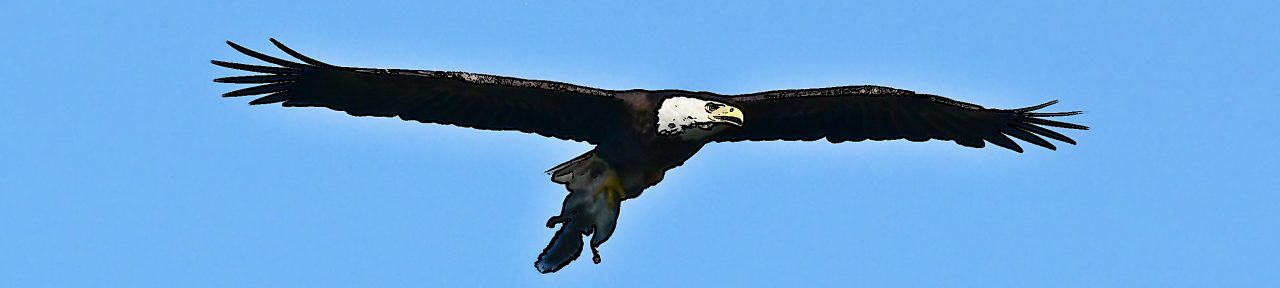
I finally caught the bald eagle in the tree at the Oldsmar pier. I had stopped by several times with my camera before finding him sitting high up there. He didn’t stay long, taking off not long after I had arrived.

As he left, he flew by so close that I couldn’t fit his wings in. I still haven’t figured out if this is one of the eagles that has a nest in my neighborhood or somewhere else. There is a another nest nearby but that couple did not use it this past year. He always flies north towards my neighborhood when he leaves which is why I’m thinking it’s him.

Walking on the pier I noticed another eagle sitting in a tree at the far end of the park. He was facing the water and wasn’t very visable from the sidewalk but I caught the above from the pier.

A few of the other birds at the pier. I think that tricolored heron was keeping his eye on the sky in case the eagle was heading towards him.

A cormorant cruises by the pier.

The black terns were still there.

The next day I was heading up to Tarpon Springs for a walk and I saw 2 eagles on a tower. I pulled over into a parking lot and shot the above. It wasn’t until later when I cropped up the picture that I realized the eagle on the right is a dummy. I don’t know if they put the fake up there to attract or repel other birds. The real eagle on the left didn’t seem to mind. Now I laugh when I drive by there and see that fake sitting up there.

SkyWatch Friday

More crazy birds at the rookery

A juvenile night heron sits alone at the front of the rookery. He’s been there on my last 2 visits. They nest deep in the bushes so I can’t see them as little babies.

A snowy egret still flirting.

The cormorants and anhingas nest high up inthe cypress trees so it’s a little harder to see those young babies. As they get older the bigger babies end up down on the rookery and Mom feeds them there. The top one is a cormorant. They have orange curved beaks and hook their fish. The middle shot are both anhingas (male on the left in all black and the female on the right has a brown chest and neck). They have pointed beaks and stab their fish. The juveniles with the great egret in the bottom shot are both anhingas.

A female grackle getting some bugs. They also nest deep in the bushes.

A wood stork getting a drink in the pond.

I saw a tricolored heron fly over to the top of a tree away from the rookery. She’s got food in her beak and she’s trying to get her young one to fly over to be fed. She was yelling at the baby to fly across the pond to her to get food instead of her bringing it to the baby.

The baby eventually flew over and got his meal.

All of the tricolored heron babies that I saw were almost fully grown. They all had their adult colors in their feathers but they still had those baby spikes on the top of their heads and were still squawking for food.